While surfing through VirusTotal we found an interesting email content persuading the victim to open an attached purchase order which in fact is a RAR file which contained a exe (ÜRÜN ÇİZİMİ VE TEKNİK ÖZELLİKLERİ_xlsx.exe). The .exe file when executed ultimately extracts and executes VIP_Keylogger in memory without touching the disk.
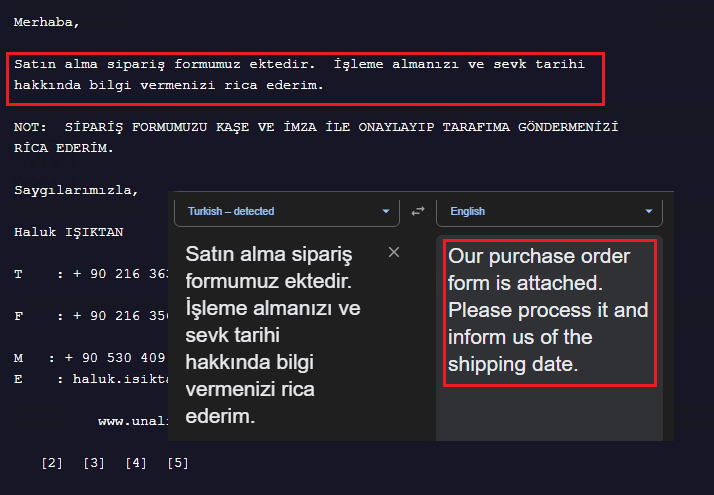
On gathering more information from VirusTotal we noticed multiple instances of this campaign targeting multiple countries with only the packaging style being different and slight differences in its programming flow and execution method.
Let us now delve into the kill-chain of 2 different cases that we noticed.
Kill-Chain
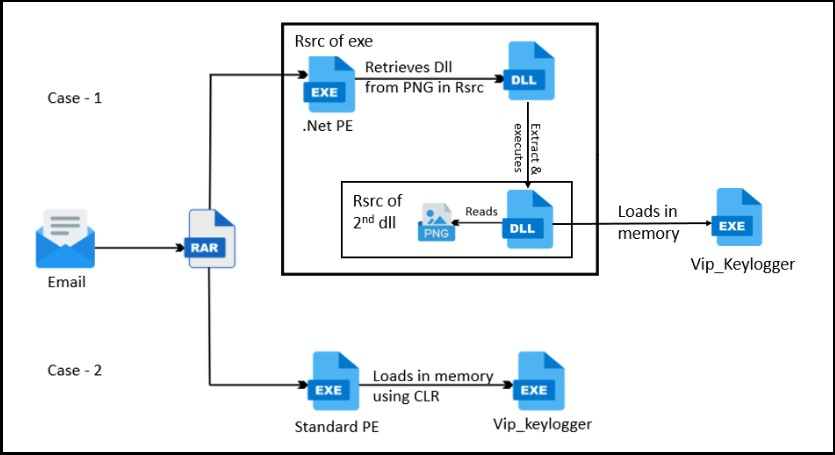
Case 1
A .NET PE file containing 2 DLLs hidden in the resource section using steganography technique. One of the DLL (Turboboost.dll) retrieves the second DLL (Vertical bars.dll) from the resource section of the source exe. which in turn contains the final payload in the resource section as a .PNG file (also using steganography). It then retrieves the final payload Vip_Keylogger using the listed api and stores the function pointers in variables and makes a sequential call to do process hollowing on the host exe by creating it again in suspended mode.
The APIs retrieved from Kernel32.dll and Ntdll for process hollowing:
ResumeThread
Wow64SetThreadContext
SetThreadContext
Wow64GetThreadContext
GetThreadContext
VirtualAllocEx
WriteProcessMemory
ReadProcessMemory
ZwUnmapViewOfSection
CreateProcessA
Case 2
In this case, it was a standard PE file containing AES encrypted bytes as the payload present inside the .data section. After decrypting it in memory it patches the AMSI and ETW and gets the required APIs to load the VIP_Keylogger file using CLR.
MAAS Payload
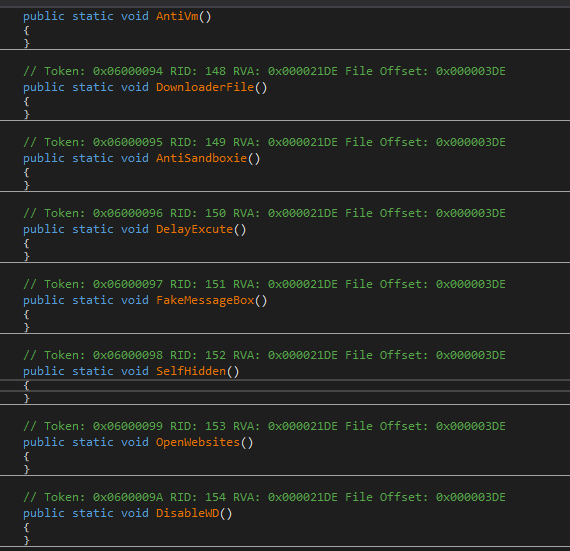
The final payload might either be in the development stage or delivered as MAAS with disabled features as per their client’s need because some of the important features such as AntiVM, ProcessKiller, DownloaderFile features are made NULL or cannot be executed. So, we at K7Labs will be getting into the nuances of the available features in this VIP_Keylogger Payload.
Features
This Keylogger captures either browser cookies, logins, credit card details, autofills, visited URLs, downloads or top sites from the appropriate files in each of the application’s designated folders as listed in the table below and converts it into a SQLite db. It then queries the required data from the DB If the browser uses AES-256 GCM encryption format it identifies it with the identifier “V10”, it decrypts the password by retrieving the master key and then processes it with DPAPIs to retrieve the password. If it were a Legacy browser, it simply decrypts the password with CryptUnprotectdata API.
| Chrome | Iridium | Slimjet | Blisk | QIPSurf |
| Nichrome | Vivaldi | UC | Epic | Sleipnir |
| Kometa | Iron | Torch | Kinza | Chrome_Canary |
| CocCoc | Chromium | Brave | BlackHawk | CoolNovo |
| xVast | Comodo | Citrio | Sputnik | |
| Orbitum | Ghost | 360_China | Uran | Falkon |
| Amigo | Cent | 360_English | Coowon | MicrosoftEdge |
| Xpom | Chedot | Superbird | 7Star | Opera |
| LieBao |
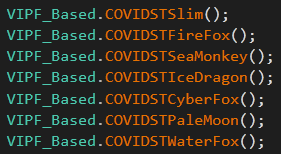
It then retrieves the logins from the listed Firefox based browsers files and it uses the PK11SDR_Decrypt API from nss3.dll to decrypt their user names and passwords.
| CyberFox | PaleMoon | Slim |
| FireFox | PostBox | Thunderbird |
| IceDragon | SeaMonkey | WaterFox |
Emails
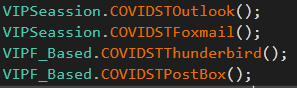
This keylogger steals the email accounts from Outlook, Foxmail, ThunderBird and Postbox. In Outlook, it retrieves the profiles from the registry (9375CFF0413111d3B88A00104B2A6676) and searches for the POP3, IMAP, HTTP ,SMTP passwords. If found, it proceeds to decrypt the SMTP Server url, email account and password using Unprotect API.
In Foxmail, it checks the foxmail.url.mailto\open\command and then retrieves the directory and from the account.rec0 it retrieves the email and password.
In ThunderBird and PostBox, it retrieves the emails’ username and password in the same way as Firefox based browsers by using the PK11SDR_Decrypt Api from nss3.dll.
Discord & FileZilla & Pidgin
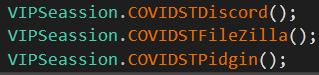
It then collects the Discord token and recently connected Filezilla and Pidgin accounts as these are not encrypted; it would simply search through the appropriate data from each of the targeted applications.
In Discord, it reads the log file from the leveldb folder by searching through “token”. In Filezilla, it reads the recentservers.xml file and searches and retrieves the Host, User, Pass, Port. In Pidgin, it reads the accounts.xml file and retrieves the protocol, username and password.
Exfiltration
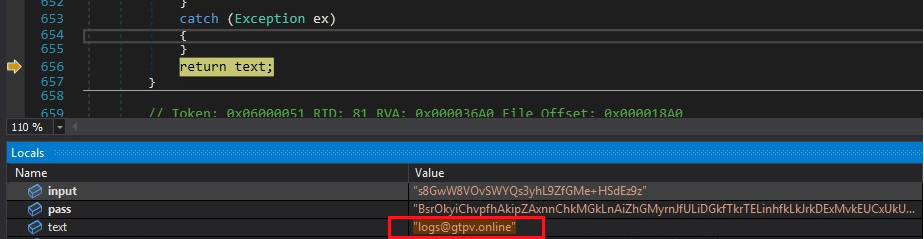
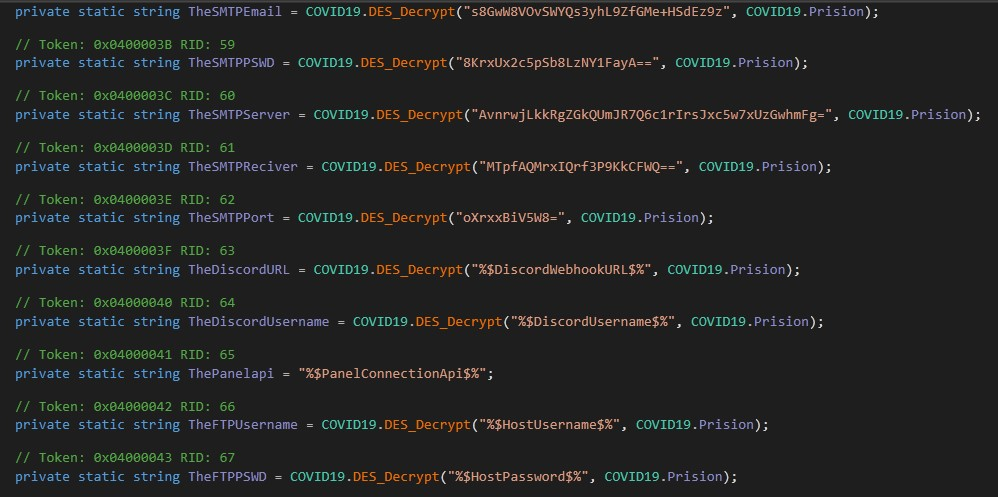
It then transfers the stolen information through 5 different ways; FTP, SMTP, Telegram, through the web using POST and via Discord. But the one we analysed has been transferring the information via email from “logs@gtpv[.]online” to “log@gtpv[.]online” via hosting2[.ro[.hostsailor[.com server using the SMTP port 587. The other ways didn’t have any of the proper urls or inputs during our analysis.
Disabled Features
Apart from the mentioned ones, It can also collect the keylogs along with foreground window, clipboard data, available WiFi-list with passwords, and screenshots but these features have not been executed. There were also 3 domains where no connection had been made by this .exe.
As we see, this kind of campaign is spreading using social engineering techniques while concealing sophisticated malware like “VIP Keylogger”. It is important to use a trusted security product like K7 to safeguard the enterprise resources.
IOCs
| Hash | Detection Name |
| D1DF5D64C430B79F7E0E382521E96A14 | Trojan ( 700000211 ) |
| E7C42F2D0FF38F1B9F51DC5D745418F5 | Trojan ( 006d73c21 ) |
| EA72845A790DA66A7870DA4DA8924EB3 | Trojan ( 005d5f371 ) |
| 694C313B660123F393332C2F0F7072B5 | Spyware ( 004bf6371 ) |
C2
varders[.]kozow[.]com
aborters[.]duckdns[.]org
anotherarmy[.]dns[.]army
51[.]38[.]247[.]67